
 English
6694

|
Since Satoshi Nakamoto mined the genesis block on January 3, 2009, Bitcoin has gone through seventeen years. It is not just a digital asset, but more like a time machine that operates accurately, strictly following the originally set rules. Just this month (March 2026), this machine will usher in a historic milestone: around the block height of approximately 940,217, the 20 millionth Bitcoin will be mined by miners. This means that more than 95% of the total supply of Bitcoins of 21 million will enter the circulation market. However, this does not mean that Bitcoin is about to run dry. On the contrary, the last 1 million Bitcoins will be released at an extremely slow rate, and it is expected to take nearly 115 years to mine them all. This milestone forces us to think about a more far-reaching question: when block rewards disappear completely in 2140, how will this multi-trillion-dollar global network rely solely on transaction fees to maintain its security and operation? deflationary code 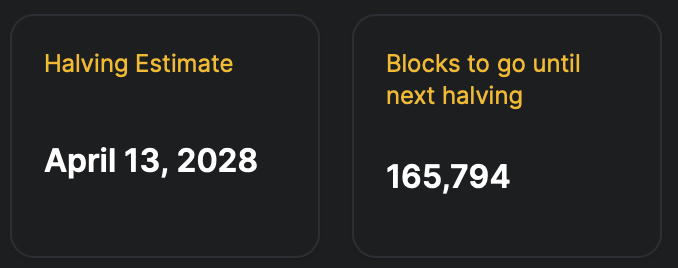 To understand the future of Bitcoin, one must first understand the underlying mechanism of its issuance. Satoshi Nakamoto’s design is a masterpiece:
This process works like clockwork:
The next halving is expected in 2028, when the reward will be further reduced to 1.5625 BTC. It is this exponential decline that makes it take more than a century for the last 5% of Bitcoins to be fully mined. In an era where central banks of various countries can convene emergency meetings at any time and decide to print trillions of dollars in money, Bitcoin, a mechanical, predictable issuance model that is free from any human intervention, is itself an extremely scarce resource. real scarcity 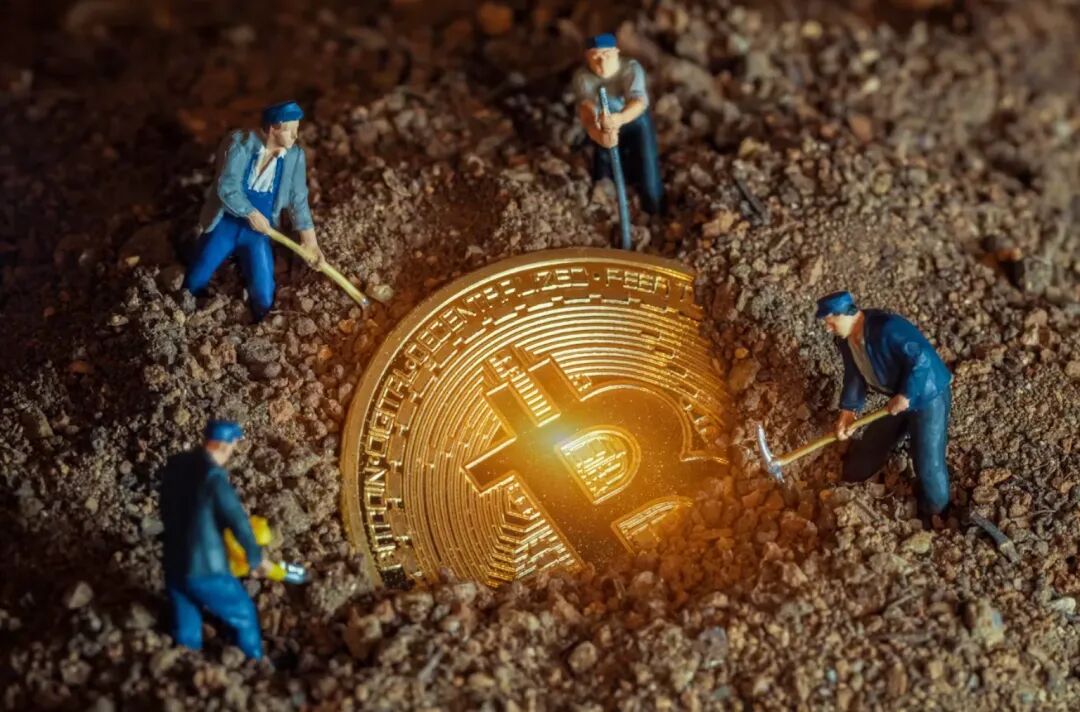 When we talk about 20 million Bitcoins, an often overlooked fact is that not all Bitcoins that are “mined” are “in circulation”. According to estimates by on-chain analysis agencies, approximately 3 million to 4 million Bitcoins have been permanently lost. There are various reasons for the disappearance of these Bitcoins: early miners forgot their private keys, the hard drive containing the wallet was discarded as garbage, or the owner died and no one knew the password. They are still visible on the blockchain, but have become "sleeping assets" that can never be used. The most famous one undoubtedly belongs to Satoshi Nakamoto himself. It is estimated that he mined around 1 million Bitcoins between 2009 and 2010, which have never moved a penny. They lie quietly in the earliest blocks and become the world's largest digital heritage. After deducting this part of permanently lost Bitcoins, the "effective circulation" that can actually be traded in the market may only be between 15.8 million and 17.5 million. This means that the true scarcity of Bitcoin is far more astonishing than its book figure of 21 million. The last 1 million coins 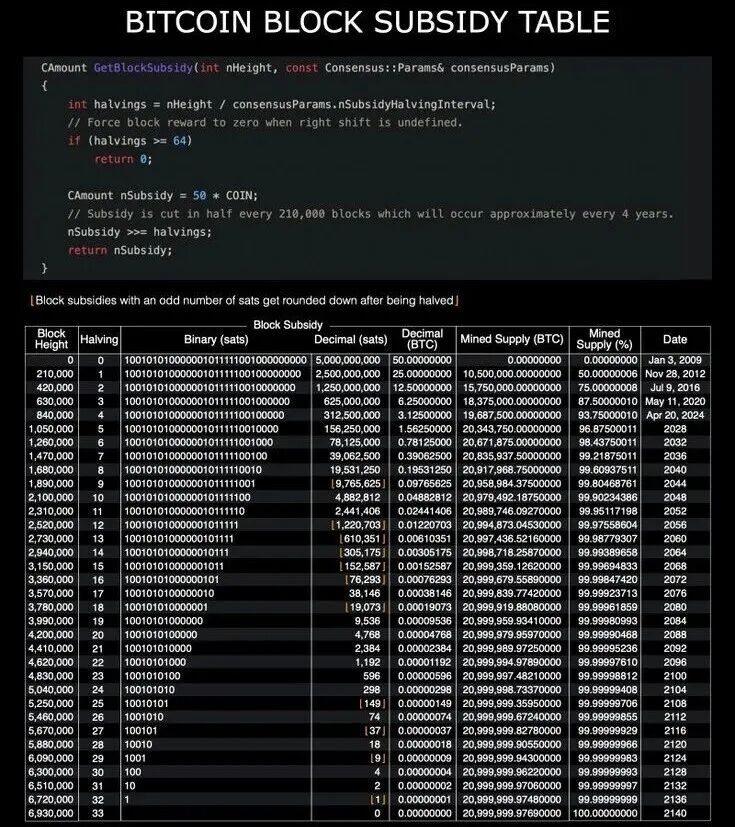 If the story of the first 20 million Bitcoins was about “discovery by early adopters,” then the story of the last million is about “the scramble for global capital.” The approval of spot Bitcoin ETFs in the United States in 2024 completely changes the rules of the game. Financial giants, led by BlackRock’s IBIT, have hoovered up hundreds of thousands of Bitcoins in just one year. Several major ETFs in the United States alone hold more than 1 million Bitcoins. This isn’t just a number, it’s Wall Street’s vote of Bitcoin’s scarcity with real money. Bitcoin’s scarcity is more certain than gold’s. Gold is still adding about 1.5% of new supply every year, while Bitcoin’s current annual inflation rate is below 0.8% and will continue to decline after each halving. As the world’s largest asset managers, sovereign wealth funds, and high-net-worth individuals begin incorporating Bitcoin into their asset allocations, the battle for limited supply has only just begun. This all leads us to the ultimate question: When the block reward reaches zero in 2140, where will the security of the Bitcoin network go? By then, the only source of income for miners will be transaction fees. Whether this entirely fee-driven model succeeds will determine Bitcoin’s ultimate fate. In this regard, industry experts have put forward two completely different scenarios. Optimistic Outlook: A Thriving Fee Market Proponents believe that over time, Bitcoin will naturally evolve a strong and sustainable fee market. Institutional demand drives high-value settlement: Sammi Li, co-founder of JuCoin, described: “By 2140, Bitcoin’s role as digital infrastructure will be deeply embedded in the global financial system. High value settlements will naturally incur significant fees. It's like real estate in a prime location, when something becomes truly scarce and indispensable, people are willing to pay a premium for it. ”Inter-institutional capital flows, cross-border settlements and the final clearing of the Layer 2 network will all become stable and high sources of fees. Feedback from Layer 2 solutions: Many people worry that Layer 2 solutions like the Lightning Network will divert transactions from the main chain, thereby reducing fee income. However, XBO Chief Operating Officer Lior Aizik pointed out that Layer 2 will not only not weaken the main chain, but will enhance its value. Layer 2 handles a large number of small-amount, high-frequency daily transactions, allowing the Bitcoin main chain (Layer 1) to focus on what it is best at: high-security, high-value final settlement. The opening and closing of Lightning Network channels needs to be done on the main chain, which itself creates a demand for block space. Therefore, Layer 2 actually brings more valuable activities back to the main chain. Potential Risks: Security and Decentralization Challenges However, this path is not without risks. If the fee market fails to grow as expected, Bitcoin could face serious challenges. Security Budget Erosion: OKX Singapore CEO Gracie Lin warned that if transaction fees are not enough to incentivize miners, the network’s total hashrate could decline. This will weaken the network's ability to withstand attacks. “We may see 20-30% of hashrate offline, similar to past hashrate shocks caused by profit squeezes or regulatory crackdowns. ” Centralization risk: An unstable or thinly profitable fee market could squeeze small and independent miners out of the market, leading to an increasing concentration of computing power in the hands of a few large mining companies. This will directly threaten Bitcoin’s core value proposition—decentralization. Lior Aizik added: “If the network becomes more centralized, it may be viewed as a ‘museum exhibit’ rather than an active ecosystem. ” Conclusion Fortunately, the year 2140 is still more than a century away. The Bitcoin community has ample time to plan, experiment, and adjust. The fact that the fee model is being discussed so deeply today is in itself a testament to the vision and resilience of this ecosystem. The birth of the 20 millionth Bitcoin is not only a numerical milestone, but also a reminder: it reminds us that a decentralized, code-based promise has been perfectly executed for 17 years. The real test of Bitcoin is not today, but in the distant future. Satoshi Nakamoto did not leave the fate of Bitcoin to any individual or institution, he left it to time. Time is the only judge in this universe who does not accept bribes and is the most impartial. Whether Bitcoin can pass this ultimate test spanning the century, we will wait and see. END  Statement: The article does not represent the views of Lianke Tianxia Media and does not form any form of investment advice. Some pictures and content come from the Internet. If there is any infringement, please contact this platform to delete it. Blockchain is an ecosystem of resource sharing. We advocate sharing. You are welcome to scan the QR code to apply to join the group and obtain more hot information. Review of past issues Cryptocurrencies rise amid Middle East war Cryptocurrency is dead, turn to AI now US seizes $580 million in cryptocurrency from Chinese fraud ring |

|

|

|

|

|

【Depth】The crossroads of Ethereum (ETH): The 1-hour K-line

Ethereum’s quantum upgrade

ETH seems to be stabilizing, but it is actually a false fire

Solana Foundation Recruitment!

sol market analysis on March 24, 2026

SOL market analysis 3.23

BNB is about to make a comeback!

The most stable method of ETH is exposed tonight!
2026-03-26
2026-03-26
2026-03-26
2026-03-26


 ETH
ETH
