
 English
55163

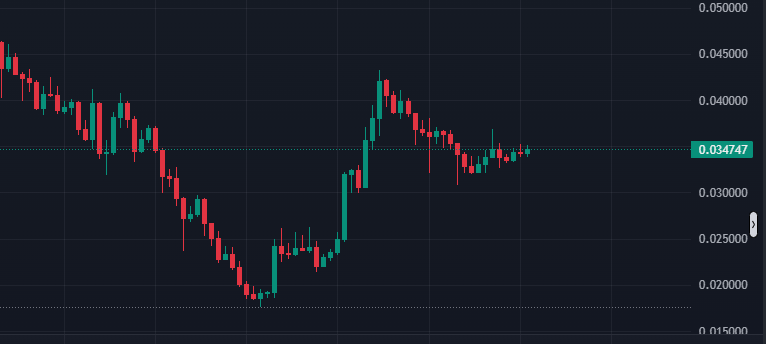 (ETH/BTC exchange rate trend) Key signal of cycle transition: When will the ETH/BTC exchange rate indicate the start of the altcoin season?
In the cyclical rotation of the cryptocurrency market, the ETH/BTC exchange rate is one of the core indicators for observing the flow of funds. When this ratio begins to rise above ground, it often indicates an increase in market risk appetite and funds are flowing from Bitcoin to Ethereum and other altcoins. This transformation is not triggered by a magic number in an instant, but a complex process of technology, emotion and financial resonance. 01 Historical law: the classic path of cyclical rotationIn past crypto market cycles, the three-stage rotation pattern of "Bitcoin rising first, Ethereum taking over, and altcoin carnival" has been staged many times. The trend of the ETH/BTC exchange rate intuitively depicts this process. A rising ratio means that Ethereum is strengthening relative to Bitcoin, and typically corresponds to a phase in which the market shifts from risk-off to risk-on. At the end of the bull market in 2017, the ETH/BTC exchange rate soared from 0.025 to around 0.12, during which the altcoin market exploded.; In the 2021 cycle, the exchange rate fluctuated upwards in the range of 0.03-0.08, which was also accompanied by the taking turns of DeFi, NFT and other sectors. 02 Critical Threshold: Identifying Technical Signals for ConversionBased on historical data analysis, market transitions require attention to a series of key technical positions and market behaviors: Key technical resistance levelsThe first resistance area (0.030-0.032): This is the key technical area that has suppressed the upward movement of the exchange rate many times in the past two years. A valid breakout of this area can be considered an initial signal of a strengthening trend. The dividing line between strength and weakness (near 0.050): This position is widely regarded as the confirmation point of market style conversion. If it can continue to stand above 0.05, it often marks that the market has entered a relatively strong stage for Ethereum, and the altcoin market may be in full swing. Current position assessment: Based on the calculation of Bitcoin at US$95,000 and Ethereum at US$3,300, the current exchange rate is approximately 0.0347, which has broken through the first resistance zone, but has not yet reached the dividing line between strength and weakness. Multidimensional confirmation signalTrend patterns are more important than a single price level: a healthy uptrend needs to form a "higher highs and higher lows" daily level structure. The Bitcoin market capitalization dominance rate (BTC.D) falls in conjunction with the decline: When BTC.D effectively falls below the key trend line from a high (usually above 60%), it further confirms the outflow of funds from Bitcoin. Improvement in market breadth indicators: The "Altcoin Quarter Index" (which measures the proportion of the top 50 altcoins outperforming Bitcoin) needs to continue to be higher than 75%, indicating that the market is broad rather than individual currency performance. 03 Current research and judgment: multiple verifications of breakthrough effectivenessThe current ETH/BTC exchange rate has stood at 0.032, showing a positive technical signal, but the effectiveness of the breakthrough requires multiple verifications: Volume confirmation: Observe whether the rise in Ethereum and related ecological tokens is accompanied by significant spot volume amplification, rather than just driven by derivatives or small transactions. Time dimension confirmation: After breaking through the key resistance, it takes at least 2-4 weeks to verify the effectiveness of the support and avoid the "false breakthrough" trap. Cooperation with ecological fundamentals: Fundamental data such as the total locked value (TVL) of Ethereum Layer 2 and the number of active network addresses should improve simultaneously to provide internal support for the rise in exchange rates. Performance of leading altcoins: Whether leading public chain tokens such as Solana (SOL) and Avalanche (AVAX) have begun to continue to outperform Bitcoin, forming early signs of sector rotation. 04 Structural questioning: different voices in this cycleIt is worth noting that there are structural differences between the current market environment and historical cycles, which may lead to changes in the traditional rotation model: The "fund locking" effect of Bitcoin ETFs: The vast majority of institutional funds that enter the cryptocurrency market through spot ETFs are allocated in Bitcoin. This part of the funds has a low willingness to rotate, which may weaken the traditional transmission mechanism. The "value diversion" of the Ethereum ecosystem: The vigorous development of Layer 2 solutions, while expanding the overall Ethereum ecosystem, also diverts some of the value capture that originally belonged to the Ethereum main network. Constraints of the macro environment: A longer-lasting high interest rate environment and increased geopolitical uncertainty may make funds more inclined to flow into "digital gold" assets such as Bitcoin rather than riskier altcoins. These structural factors mean that even if the ETH/BTC exchange rate breaks through key positions, the altcoin market in this cycle may be different from history in terms of intensity, breadth, and duration. 05 Operational framework: Finding basis for decision-making amid uncertaintyFacing the complex market environment, investors can build a multi-dimensional decision-making framework: Scenario analysis and responseScenario 1: Traditional rotation path (probability 35%)
Scenario 2: Structural rotation path (50% probability)
Scenario 3: Rotating failure path (probability 15%)
Risk management essentialsPosition management: Before the market direction is clear, maintain a moderately flexible position and avoid over-allocating altcoins before a breakthrough is confirmed. Stop loss discipline: Set a clear stop loss level for altcoin positions. If the ETH/BTC exchange rate falls below 0.032 again and cannot be recovered quickly, you should consider reducing risk exposure. Layout in batches: Even if you are optimistic about the prospects of rotation, you should adopt a buying strategy in batches to avoid investing all the funds at once. Continuous monitoring: Pay close attention to U.S. monetary policy trends, regulatory policy changes and other macro factors, which may change the market style at any time. 06 Conclusion: View market evolution from a dynamic perspectiveThe challenge of the ETH/BTC exchange rate to key positions provides an important window for observing market cycle transitions, but it should not be regarded as the only basis for decision-making. The cryptocurrency market is constantly evolving. Although historical laws have reference value, each cycle has its own unique macro background, capital structure and narrative logic. For investors, what is more important than predicting accurate conversion points is to establish a complete analysis framework and take technical signals, fundamental data and macro environment into unified consideration.; Maintain the flexibility of the strategy and adjust positions in a timely manner according to the actual evolution of the market ; Stick to the bottom line of risk management and avoid overexposure to any single narrative or metric.
|

|

|

|

|

|