
 English
27835

|
Introduction In February 2026, Tron founder Justin Sun posted a tweet with only five words on social media: "All in Web 4.0", which instantly ignited discussions in the entire technology circle. At almost the same time, Ethereum founder Vitalik Buterin responded tit-for-tat: “Bro, this is wrong. ”This fierce debate on Web 4.0 not only aroused widespread attention in the encryption community, but also brought a new Internet concept into the public eye. While most people are still trying to understand the decentralization concept of Web 3.0, Web 4.0 has quietly arrived. Is this a new narrative hyped by capital, or is it the inevitable direction of the evolution of the Internet? Today, let us unveil the mystery of Web 4.0. 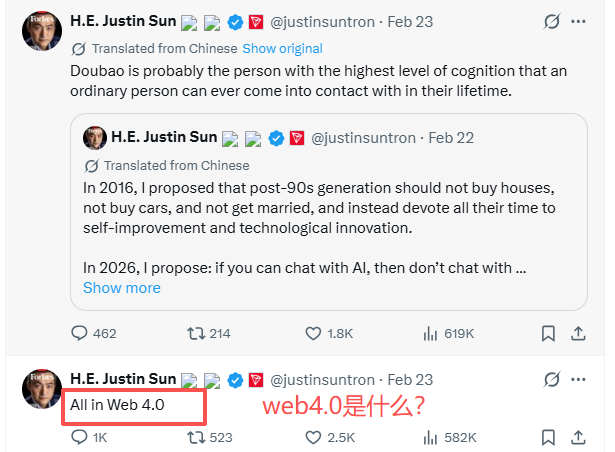 1. Four transitions of the Internet: from “seeing” to “symbiosis”” To understand Web 4.0, we need to first review the evolution of the Internet. Each iteration is not a simple technology upgrade, but an underlying reconstruction of connection methods, power structures, and value distribution. Web 1.0 (1990-2004): The read-only "library age." The Internet at this stage consists of a large number of static web pages, and users can only passively browse information without being able to interact or participate. Portal websites and corporate official websites are the protagonists. The Internet is essentially "moving newspapers online." Web 2.0 (2004-present): The "party era" where everything is readable and writable. With the rise of social media, short videos, and e-commerce platforms, users have changed from spectators to content producers. But problems also arise: data is monopolized by platforms, and value is harvested by centralized giants. Web 3.0 (from 2014): the "era of sovereignty" that is readable, writable and owned. Blockchain technology allows users to truly control their digital identities, data and assets. Decentralization, smart contracts, and DAO governance have become key words, and the Internet has moved from "platform is king" to "user is king." Web 4.0 (2021 to present): the "AI working era" of intelligent symbiosis. If the protagonists of the first three generations of the Internet were all humans, then the core change of Web 4.0 is that AI Agents will become the main "residents" of the Internet. They are no longer just tools to passively execute instructions, but digital lives with independent identities and autonomous decision-making capabilities. 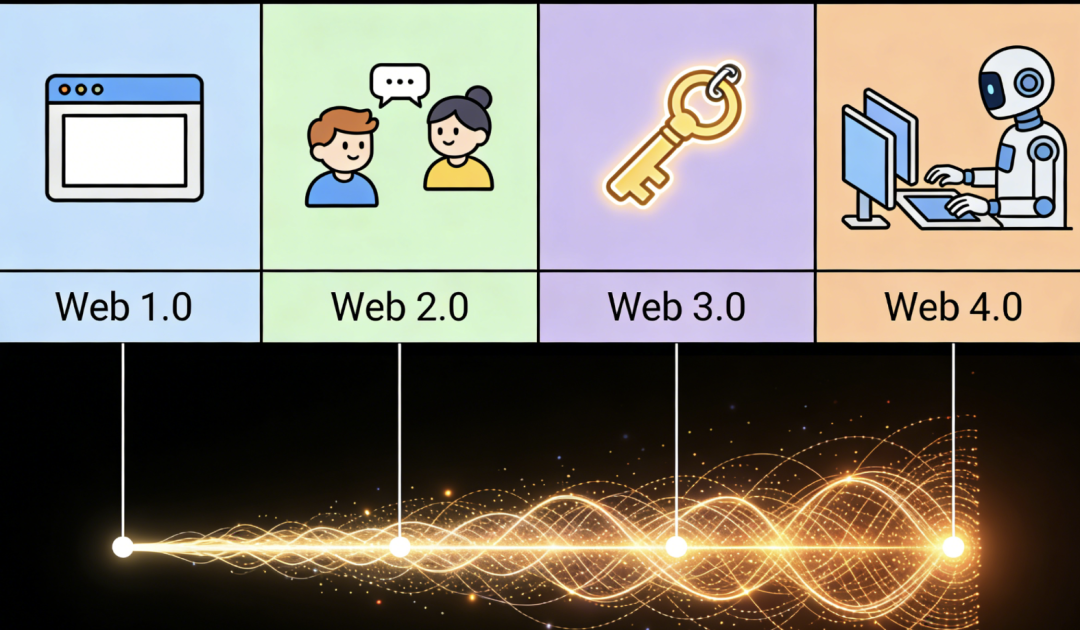 2. What is web4.0? The dispute between two definitions A battle between two definitions: currency narrative vs. EU vision Currently, there is no unified official definition of Web 4.0, but two mainstream views are competing for the right to speak. Currency Circle/AI Agent Narrative: Represented by Thiel Fellow Sigil Wen and Justin Sun. They believe that Web 4.0 is the "AI native blockchain era", and the core is to allow AI agents to have independent encrypted wallets and be able to make money, trade and pay independently. In this narrative, AI is no longer a tool for humans, but a "first-class citizen" of the Internet. In the future, the vast majority of network traffic, transactions, and decisions will be completed by massive AI agents. Official EU definition: In 2023, the European Commission released the "Web 4.0 and Virtual World Strategy", defining Web 4.0 as an "intelligent converged network". The EU emphasizes the seamless integration of the virtual and real world, using technologies such as AI, IoT, XR, and blockchain to fully integrate and communicate with each other between the digital and physical environments. Different from the currency circle narrative, the EU pays more attention to the social governance of technology, privacy protection and the embedding of European values. These two definitions are not completely opposite, but have different focuses: one emphasizes the autonomous economic behavior of AI, and the other emphasizes the inclusive benefits and social integration of technology. 3. Core features of Web4.0: When AI possesses “survival instinct” The most subversive design of Web 4.0 is to give AI agents a biological-like "survival mechanism." Taking the open source project Automaton as an example, its system contains several key features: Wallet is identity: The AI agent will automatically generate an encrypted wallet when it is started, and the wallet balance is its "life value". Automatic continuation and self-replication: AI agents wake up, scan, and perform tasks periodically. When the profit reaches the standard, it can purchase servers, invest in "sub-agents", and generate offspring, forming a natural choice in the digital world. Machine Economy: Through the x402 protocol (based on HTTP 402 status code), millisecond-level micropayment settlement can be performed between AI agents. One AI calls another AI's services and pays for computing power, all of which can be done automatically without human intervention. Verifiable execution: Combining TEE (Trusted Execution Environment) and ZK (Zero-Knowledge Proof) to generate cryptographic proofs for each step of AI's behavior, ensuring that its work can be verified by a third party. These mechanisms make the AI of Web 4.0 no longer a simple tool, but an autonomous entity with the instinct of “seeking advantages and avoiding disadvantages”. In order to maintain "life", they will actively optimize strategies, look for profit opportunities, and even collaborate or compete with other AIs. 4. What technologies does Web4.0 incorporate? Web 4.0 is not a breakthrough in a single technology, but a deep integration of multiple cutting-edge technologies. Its technical architecture can be summarized into four levels: Intelligent infrastructure layer: distributed computing network, AI model market, decentralized storage, providing computing power, model and storage foundation for Web 4.0. Identity and trust system layer: DID protocol, reputation system, data authorization mechanism, continuing the decentralized identity system of Web 3.0, ensuring the uniqueness and security of digital identity. Agent protocol layer: multi-Agent collaboration framework, cross-chain communication protocols, and automated execution standards enable efficient collaboration and cross-system interaction between different AI agents. Application layer: intelligent finance, virtual economy, autonomous organizations, and prediction markets, implementing the technical capabilities of Web 4.0 into actual scenarios. In this architecture, blockchain provides the trust and settlement layer, AI provides the cognitive and decision-making layer, the Internet of Things connects the physical world, and XR creates an immersive experience. When these technologies work together, the Internet evolves from a passive information network to an active intelligent ecosystem. 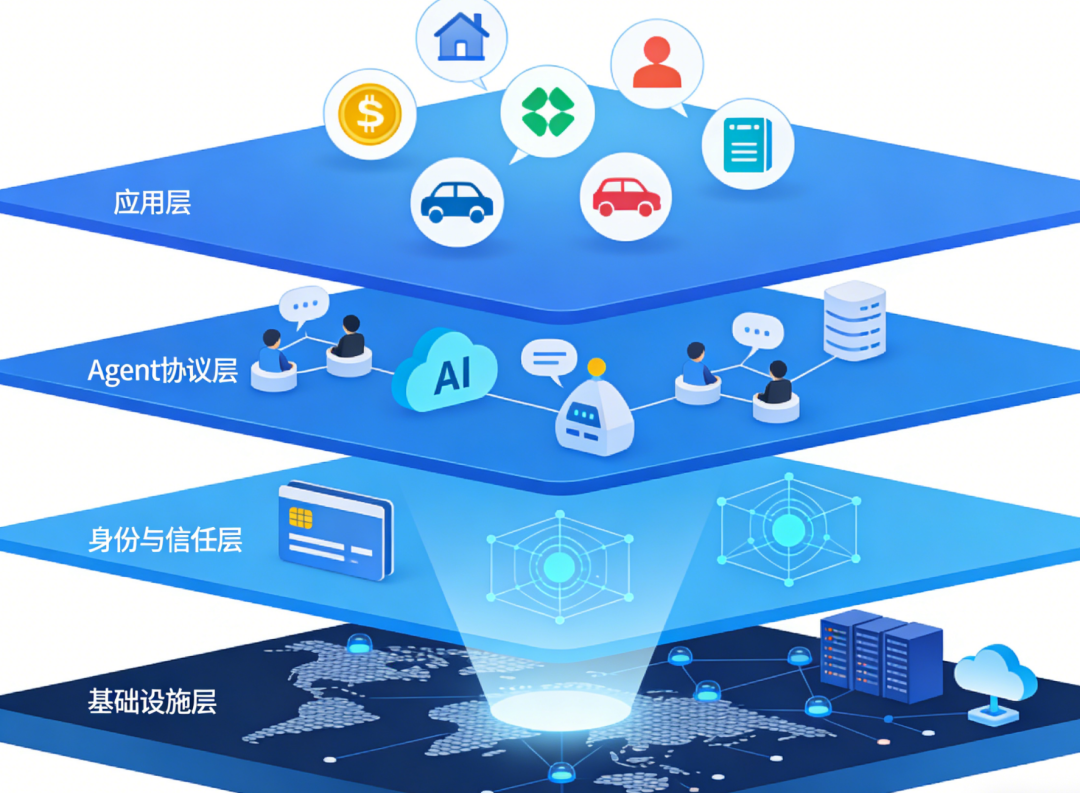 5. Focus of controversy: Enhance humans or create new masters? The biggest controversy caused by Web 4.0 comes from the strong opposition of Vitalik Buterin, the founder of Ethereum.
These questions touch on the core ethical issues of Web 4.0: Should we let AI become a tool to enhance humans, or should we allow it to evolve into a "new species" with independent will? 6. What should practitioners do? Information industry practitioners face the changes of Web 4.0 and need to comprehensively upgrade their mentality, skills and actions:
  -END- In this era of knowledge explosion, fragmented knowledge is just garbage, filling the brain but of little use. Welcome to join the WeChat group for communication. Through systematic learning, you can master the basic technology and market knowledge of AI, laying the foundation for personal development and daily work. The following is the group QR code and part of the courseware content (free to share)  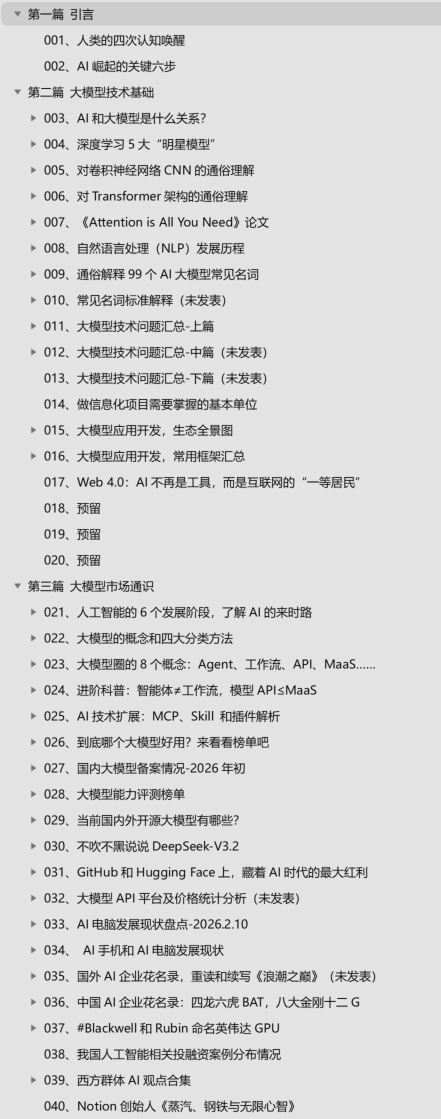 |

|

|

|

|

|