
 English


40026

 The value of Bitcoin has quietly shifted from being narrative-driven to being configuration-driven Introduction by Yuedaolabs: “Recently, Bloomberg published an analysis stating that Bitcoin is facing the loss of its narrative function.”: Gold is losing its position as “digital gold,” while stablecoins are taking over in payments – suggesting that the market is shifting away from speculative trends. This assertion has sparked widespread discussion amid the market turmoil. However, as the focus shifts from its “narrative function” to its “holder structure and value foundation,” Bitcoin is undergoing a profound yet misunderstood transformation. This article attempts to re-examine the true state of BTC at the current stage by considering macro-level capital flows, changes in the investor landscape, and the logic behind long-term asset allocation strategies. ” “The Embarrassing Origins of the “Narrative Crisis”: Narrative ≠ ValueBloomberg believes that…: Bitcoin has lost its ability to influence discourse in various “narrative contexts.”
Behind these seemingly reasonable data lies an underlying premise: The value of Bitcoin must be defined by external “narrative” functions. But just as the value of gold has never strictly relied on any particular function—it is neither the best means of payment nor the optimal hedge asset—the value of Bitcoin should not be determined solely by narrative logic. Narration provides focus, but it does not constitute the source of value.  (The material is sourced from the Internet.) The Era of ETFs: Profound changes in the composition of holdersIn the past, the BTC market was primarily driven by retail investors, exchanges, miners, and emotionally motivated funds—groups whose behavior tends to fluctuate significantly in response to short-term price changes. However, with the introduction of spot Bitcoin ETFs, a new class of investors has quietly entered the market:
This shift in the structure of holders indicates that the price behavior and liquidity characteristics of Bitcoin are transitioning from being “hotspot-driven” to becoming “configuration-stable”. While short-term price fluctuations still exist, the long-term holding logic is reshaping the underlying foundations of the market, rather than simply being the result of certain narratives losing out in a particular sector.  (The material is sourced from the Internet.) Has narrative coherence been lost, or have the underlying values matured?When market sentiment cools down, the "failure of narratives" tends to be exaggerated. The strength of gold, the activity of stablecoins, and the booming prediction market are indeed diverting attention. However, the shift in focus does not mean that the asset itself loses its significance. Many times, the market simply shifts its focus of discussion to a different aspect.  (The material is provided by Reuters.) Over the past few years, Bitcoin has been labeled in numerous ways: digital gold, a means of payment, an inflation-hedge asset, and even a representative of risky investments. But in reality, it may not necessarily need to assume all of these roles. What has truly enabled it to survive to this day is not any particular use case, but rather the long-standing consensus in the market regarding the concept of “decentralized scarce assets.” When the market enters a period of volatility, storytelling naturally subsides. But if the consensus still exists, the underlying logic will not be easily undermined. Behind the price correction lies a shift in the capital structureThe recent decline in prices can easily be interpreted as a sign of "diminished market confidence." But if we extend the time dimension, we will see that the structure is quietly changing. Since the introduction of spot ETFs, their holder composition has become different from what it used to be. Markets that were once dominated by high-frequency trading and short-term capital now include a greater proportion of long-term, strategic investors. Such funds are not designed to chase short-term fluctuations, nor will they quickly withdraw their investments due to a few setbacks. In other words, price fluctuations still exist, but the underlying participants in the market are changing. The impact of this change is…: Market trends are no longer driven by a single emotion as they used to be; instead, they more closely follow the patterns of traditional assets. The increases may be slower, and the fluctuations might not be so intense, but the stability is gradually improving. If what came before was driven by emotions, then what we are experiencing now is more like a phase of discomfort during the process of assetization. 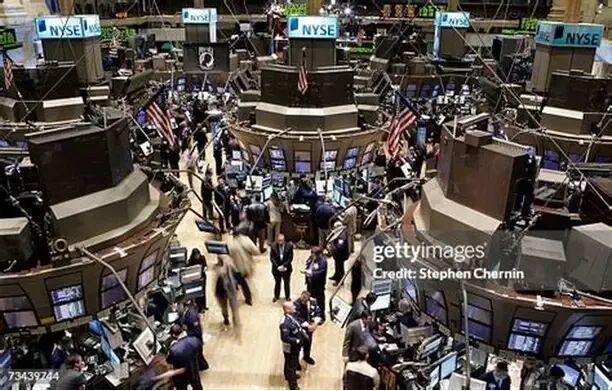 (The material is courtesy of gettyimages.) BTC in the phase of shedding its skin: What is more important than a “crisis” is transformationWhen we shift our focus from whether or not the narrative is being compressed to the logic of value and the structure of its holders, we can arrive at a more profound conclusion: Bitcoin is not dead; rather, it is undergoing a period of value consolidation and restructuring of its capital structure. Short-term price declines do not equate to a loss of value; rather, they are a typical characteristic of a market transitioning from emotionally driven participation to asset allocation-based behavior. Narratives certainly change over time, but the underlying values are firmly rooted in network effects, scarcity, compliant participation, and the need for long-term capital. In other words, Bitcoin is transitioning from being a “hot topic” to becoming an “asset-based asset,” and this type of evolutionary process is inevitably part of the maturation of any mature market. Click on the card below to follow us and help you see through the fog and understand crypto. 📍 Location: Hong Kong Convention and Exhibition Centre (HKCEC) - 📅 Time: April 20–23, 2026 - The 2026 Global Web3 Annual Event is scheduled! The “Hong Kong Web3 Carnival”, co-hosted by Wanxiang Blockchain Lab and HashKey Group, has come together again. Over four days, 50,000+ participants, 300+ global experts, and 150+ top-tier projects together defined the inaugural year of the integration of Web3 with AI, fintech, and RWA.  [First Batch of Key Guests] Chan Mo-po | Secretary for Finance of the Hong Kong Special Administrative Region Xiao Feng | Chairman of Wanxiang Blockchain & HashKey Group Qiu Dagen | Member of the Hong Kong Legislative Council (from the tech and innovation sector) Lily Liu | President of the Solana Foundation Cynthia Wu | Co-founder of MatrixPort Yat Siu | Co-founder and Chairman of Animoca Brands Li Guoquan | Dean of the Global School of Financial Technology  🎁 Exclusive benefits for Amphi members: As an official community partner, we have secured this for you 15% extra discount! 🎟️ Discount code: YUEDAO  (Scan the code to purchase immediately) 👉 Buy now!: https://luma.com/hkweb3festival_2026?coupon=YUEDAO ⚠️ Important reminder: Using discount codes together can save you hundreds of dollars!
|

|

|

|

|

|

【Depth】The crossroads of Ethereum (ETH): The 1-hour K-line

Ethereum’s quantum upgrade

ETH seems to be stabilizing, but it is actually a false fire

Solana Foundation Recruitment!

sol market analysis on March 24, 2026

SOL market analysis 3.23

BNB is about to make a comeback!

The most stable method of ETH is exposed tonight!
2026-03-26
2026-03-26
2026-03-26
2026-03-26


 ETH
ETH
