
 English
8698

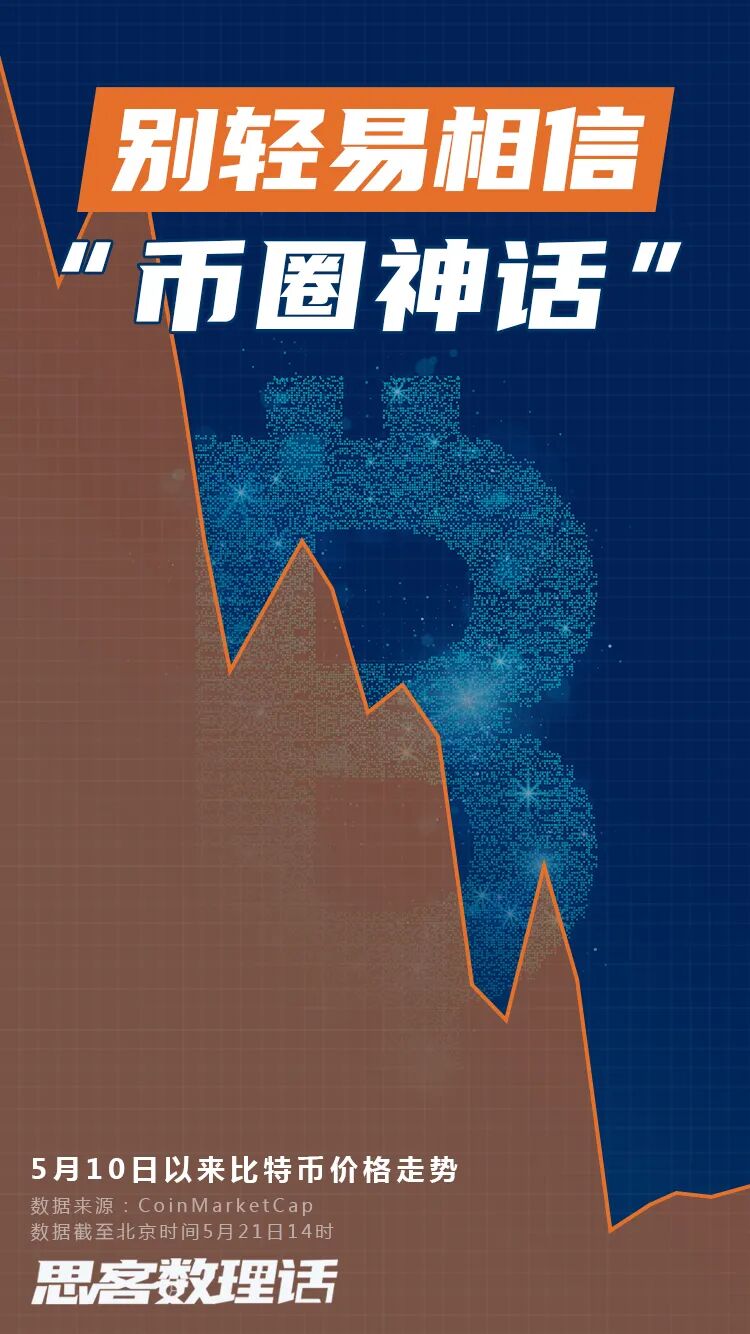 The recent virtual currency market has been like a roller coaster, with prices soaring and plummeting in a manner that has attracted considerable attention from the public. On May 19th, the price of Bitcoin briefly fell below $30,000, and the prices of other virtual currencies also experienced significant fluctuations. On May 20th, the price of Bitcoin rebounded and exceeded $42,000. 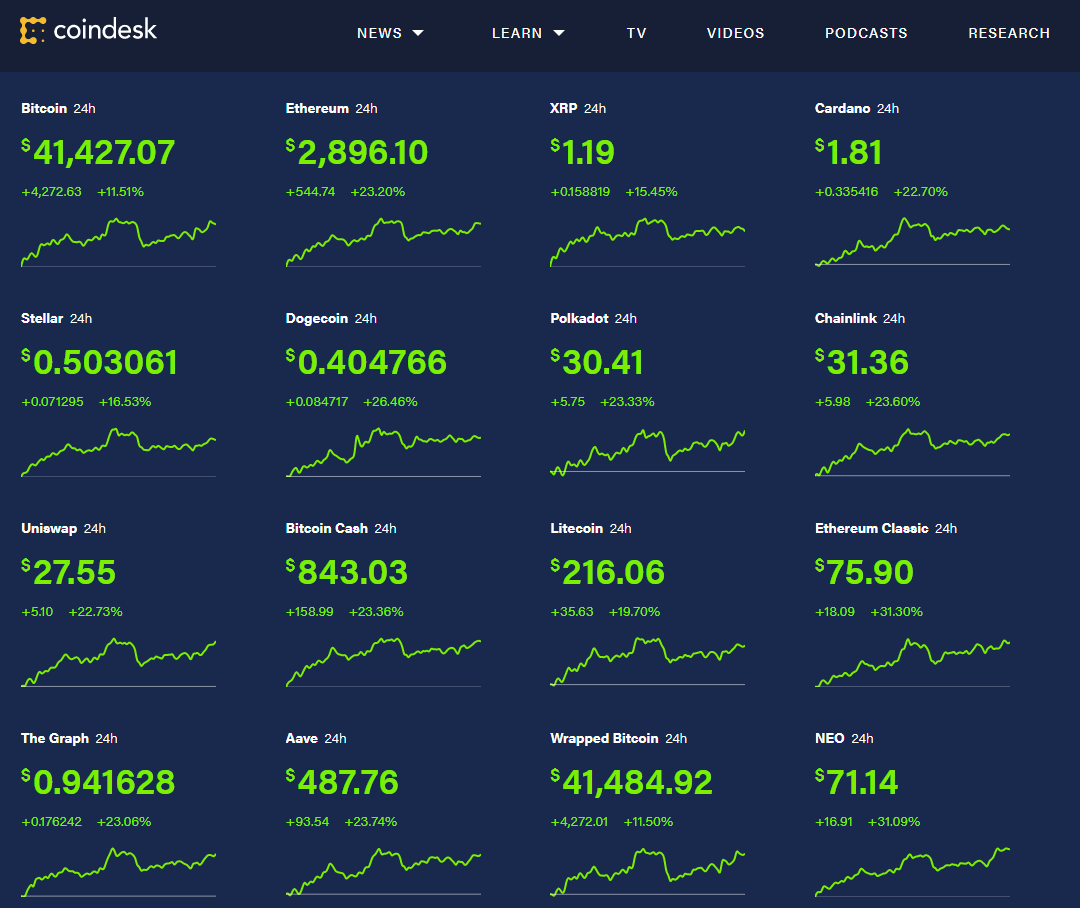 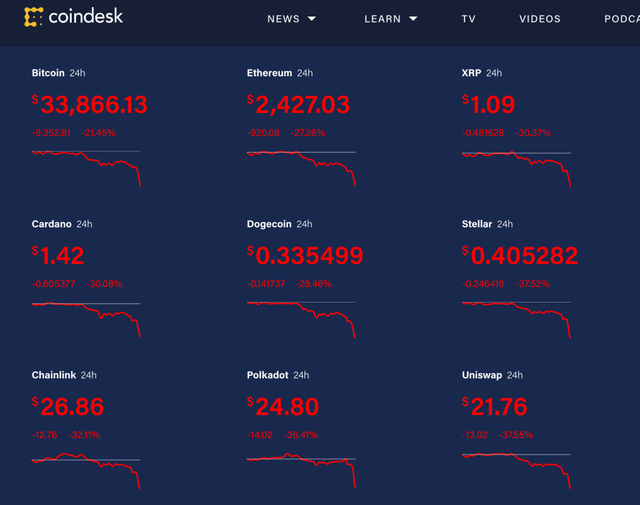 ▲The image above: Real-time prices in the “cryptocurrency circle” on May 20 ; The figure below: Real-time prices in the “crypto community” on May 19th. Image source: coindesk ““Roller coaster” or “Ice Age”?  In early May, the “cryptocurrency sector” experienced rapid growth. “Virtual currencies such as “Chiba Inu Coin” and “Dogecoin” have seen their prices soar; in particular, “Chiba Inu Coin” experienced a 300-fold increase in value within a single month, with its highest price reaching $0.000038 ; “Dogecoin once reached a new high of $0.74, representing a staggering 158-fold increase since the beginning of the year. 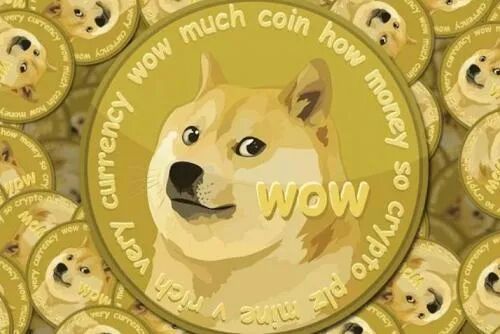 Amid the astonishing gains in virtual currencies and the continuous promotional efforts by Tesla CEO Elon Musk, market sentiment is high. “Virtual currencies such as “Dogecoin” and “ChaiCoin” currently have low prices, making them relatively easy for new investors to get started with. In a highly speculative market environment, some investors hope to become rich quickly by purchasing large quantities of these low-cost virtual currencies. 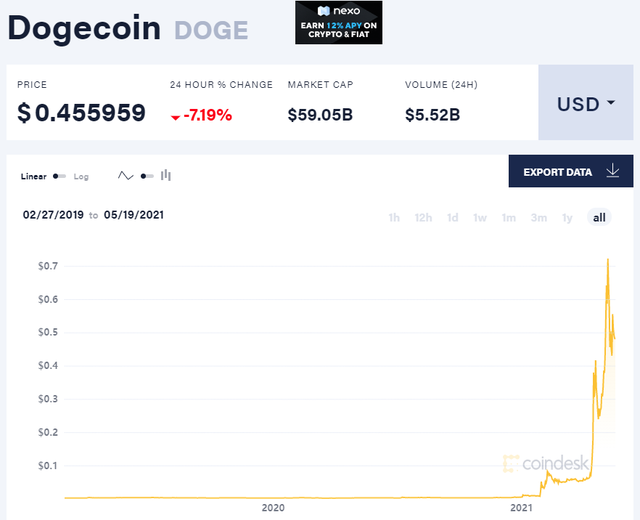 ▲“The increase in the value of Dogecoin over the past two years. Image source: coindesk Since mid-May, the virtual currency market has experienced several rounds of sharp declines. Elon Musk has also repeatedly expressed skepticism about virtual currencies and hinted that Tesla may have sold its bitcoin holdings. On May 19th, the price of Bitcoin fell by more than 30% compared to its peak at the beginning of the month, while the price of Dogecoin saw a daily decline of up to 20%. Some netizens have said that from the moment of purchase until the time of farewell, a harsh winter has suddenly descended upon the “cryptocurrency world”.  ▲On May 8th, during the “Saturday Night Live” show, Musk stated that Doge Coin was nothing but a scam. Image source: Sina Weibo Some netizens have analyzed that the current virtual currency market bears similarities to the dramatic fluctuations that occurred in 2017-2018. After the price of Bitcoin rose, it sparked a boom in the virtual currency market, attracting numerous investors. As a result, numerous “altcoins” emerged, competing with Bitcoin for market share. Subsequently, Bitcoin’s price fell, and the entire virtual currency market entered a two-year “ice age,” during which most investors likely suffered significant losses. In a climate of rampant investment activity, chaos often ensues 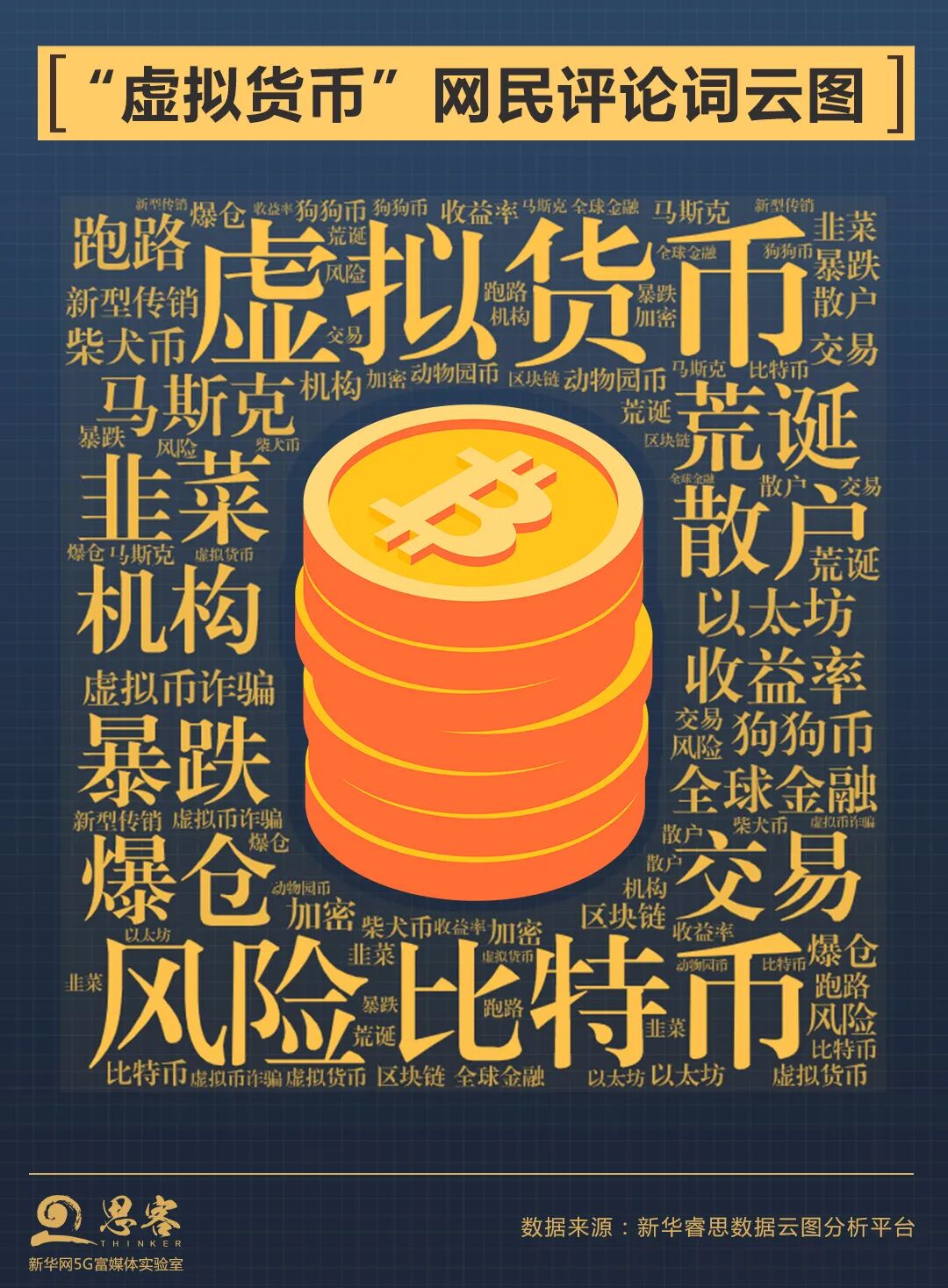 Virtual currencies are essentially virtual commodities that have no real value behind them; they are not true money, and they carry relatively high investment risks. So why are they still so “crazyly popular”? Fanatic speculators, inflammatory propaganda, and opportunistic intermediaries—all contribute to the rampant speculation that drives the virtual currency market forward. Marketing messages related to cryptocurrency trading are ubiquitous on internet platforms, and with the added influence of certain self-media outlets and individuals actively involved in such trading, many investors end up getting drawn into it. However, such promotional materials deliberately exaggerate the purported high returns of virtual currencies while often conveniently ignoring the high risks associated with these investments. 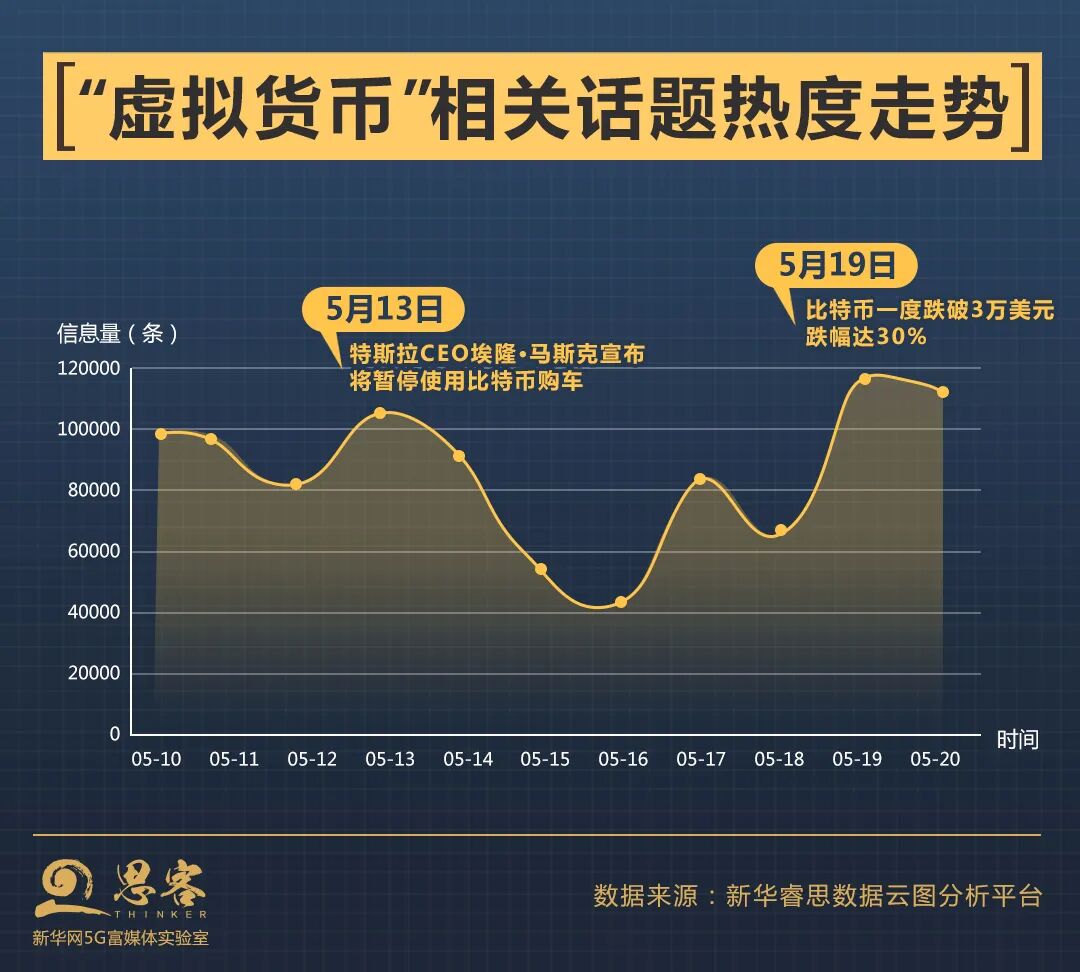 Furthermore, most virtual currency trading platforms operate outside of legal regulation. Cases of fictitious transactions, price manipulation, sudden platform closures, and fraud are common, especially in China, where some “underground” exchange servers are located overseas, making it difficult to protect investors’ assets. 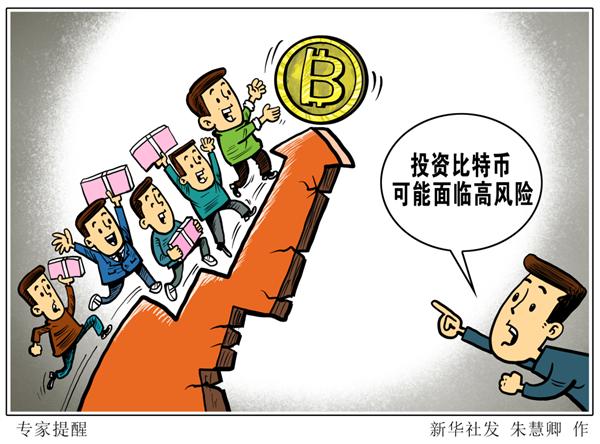 In fact, the risks associated with the speculation in virtual currencies extend beyond the financial markets alone; they also inevitably lead to a range of illegal and criminal activities. Scams are carried out directly under the guise of “coin-to-coin exchanges” or “speculating in coins”. For example, scammers may claim to be preparing to purchase large amounts of virtual currency and ask professional “traders” to handle the transactions, promising to cover the transaction fees and a certain percentage as profit. In order to make the “scalpers” fully believe in the concept of “proxy purchasing,” a few successful transactions in the early stages are necessary to completely trick them into falling for it. In the end, the goal is to carry out the largest transaction possible—once the “scalper” obtains the virtual currency in question, they avoid paying any transaction fees and simply flee, turning the virtual currency into cash. 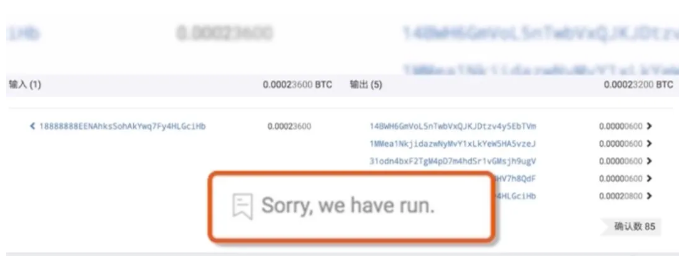 ▲The Plus Token cryptocurrency wallet announced that it would stop accepting withdrawals, and stated the following:: Sorry, we ran away. Image source: CCTV News Deliberately exaggerating the value of virtual currencies and creating the concept of “air coins” to conduct illegal fundraising and attract public deposits, only to eventually collapse and flee the scene. For example, the virtual currency wallet Plus Token encouraged its members to recruit new users by offering dividends and rewards. As a result, 2 million people were drawn into this pyramid scheme, involving amounts exceeding 40 billion yuan. There are also pyramid schemes that claim to use “national currency” and the “Tianhe-2” supercomputer, and under the guise of providing services to increase the value of virtual digital currencies, engage in illegal fundraising, pyramid schemes, and fraud. Taking advantage of the fact that virtual currencies can be converted into cash, they are used to launder “dirty money” generated by criminal activities. Some media reports indicate that the largest U.S. pipeline operator for refined products, which recently fell victim to a hacker ransom attack, was forced to pay the ransom in virtual currency. Higher risks require even stricter supervision 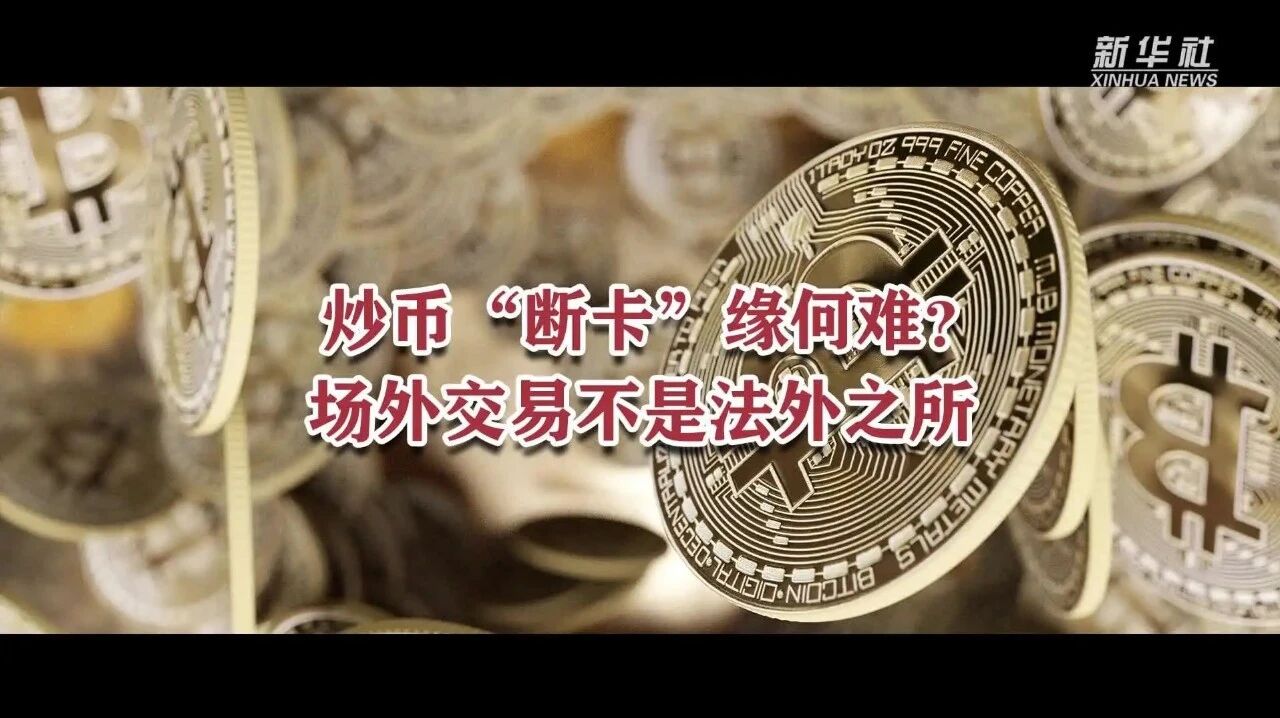 video: https://mp.weixin.qq.com/mp/readtemplate?t=pages/video_player_tmpl&action=mpvideo&auto=0&vid=wxv_1878797215150702603 ▲Video source: Xinhua News Agency Compared to traditional investment instruments, the cryptocurrency market is immature, characterized by high volatility, excessive speculation, and a lack of clear regulatory guidelines, making it extremely risky. How to prevent the risks associated with the speculation and trading of virtual currencies has always been a concern for regulatory authorities, and stricter regulation is clearly an inevitable trend. On May 18th, the China Internet Finance Association, the China Banking Association, and the China Payment and Clearing Association jointly issued a notice requiring their member institutions to refrain from engaging in virtual currency trading, conversion, or any other related financial activities. This announcement serves as a warning of potential risks and serves to alert the virtual currency market to the current chaos. 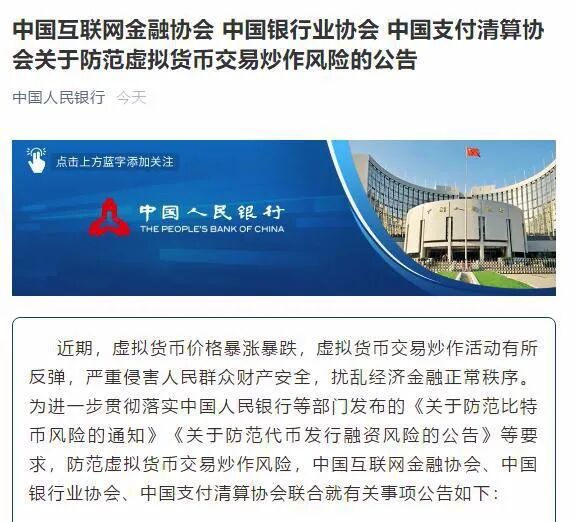
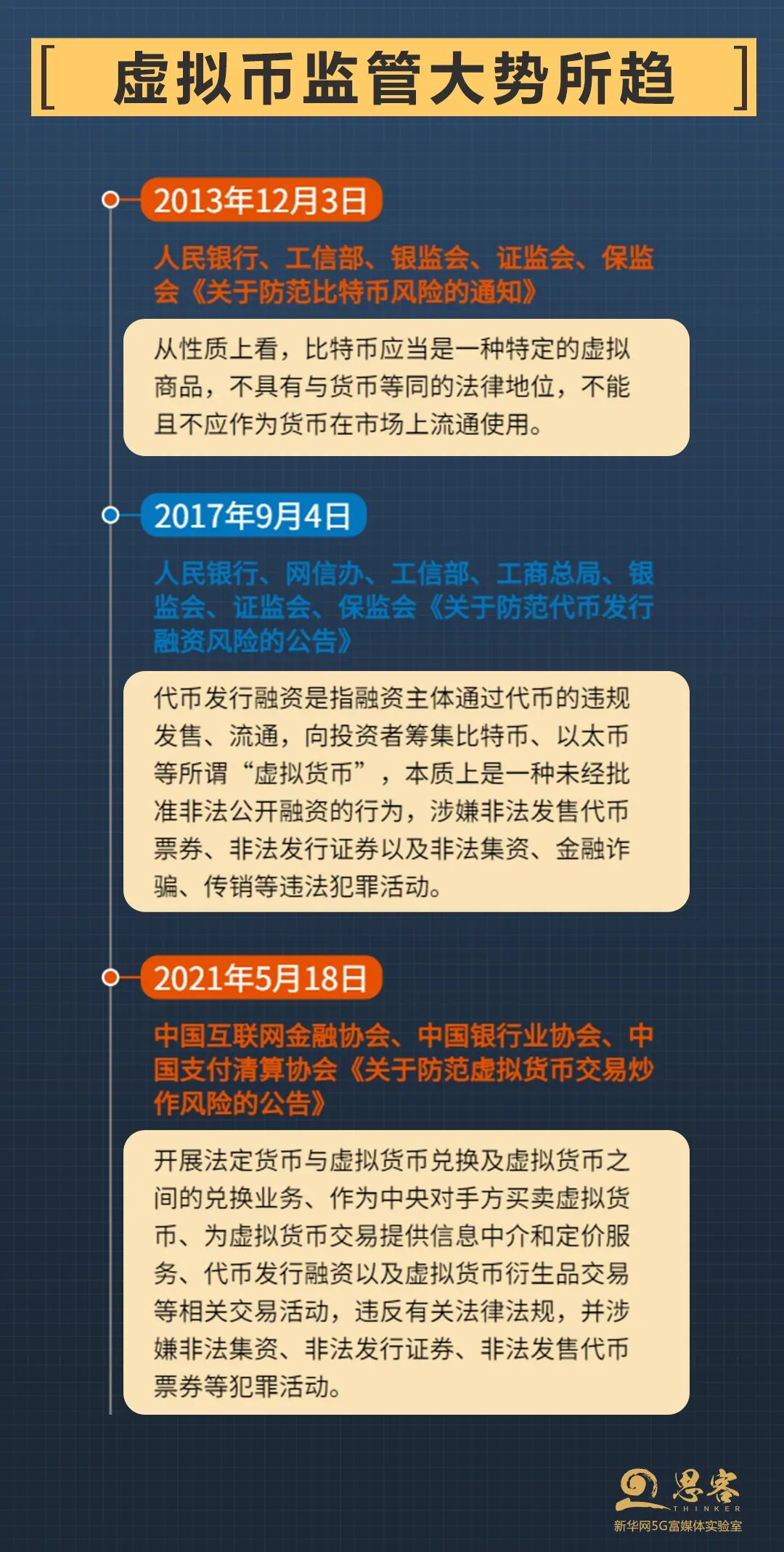 In recent years, the pace of strict regulation regarding virtual currencies has never slowed down. As early as 2013, five ministries and commissions including the People's Bank of China issued the "Notice on Preventing the Risks Associated with Bitcoin." In September 2017, seven departments including the People’s Bank of China jointly issued the “Announcement on Preventing Risks Associated with the Issuance and Financing of Tokens,” which guided local authorities to shut down 173 such platforms. Subsequent regulatory efforts continued at a strict level, resulting in the closure of another 38 newly established domestic platforms. In May this year, the Inner Mongolia Development and Reform Commission established a reporting platform for virtual currency “mining” enterprises, and will continue to maintain strict supervision over such activities in the future.  ▲At a hydropower station in Aba Prefecture, Sichuan, the sheds constructed from blue steel plates in the footage are what are referred to as “mining sites.” Source: Visual China In the face of the chaos in the virtual currency market and the resulting illegal activities, it is necessary for all parties to work together to put a “tight rein” on virtual currencies. As the state imposes further strict regulations, consumers must also enhance their awareness of risks and avoid participating in any speculative activities related to virtual currencies. They should never believe in the “myth” of quickly becoming rich through virtual currencies. References: 1. "Commentary": “The strong regulatory signals regarding virtual currencies cannot be ignored,” Xinhua News Agency, May 21, 2021 2. “Various ‘cryptocurrency speculation’ efforts are fueling the trend; be wary of the ‘shills’ behind this virtual currency hype,” Shanghai Securities News, May 21, 2021 3. “Chasing Virtual Currencies Comes with High Risks,” Economic Daily, May 20, 2021 4. “The virtual currency market experiences severe volatility as regulators issue consecutive warnings about the risks involved,” Economic Reference News, May 20, 2021 5. Three Major Financial Associations Speak Out: Providing virtual currency trading services is suspected of engaging in illegal financial activities, China Securities Journal, May 19, 2021 6. “Well-packaged ‘crypto giants’ trick seasoned traders into falling for a scheme,” Procuratorial Daily, May 20, 2021 Chief Producer: Qian Tong Planning: Liu Juan Producer: Tang Xinyi, Tang Hui Author: Xie Yipeng Edit: Wong Chik-sin Design: Zhao Wei Proofreading: Song Minrong Co-produced: Xinhua Net Thinker, Xinhua Net 5G Rich Media Laboratory  |

|

|

|

|

|