
 English
7090

Quantum upgradeRecently, the Ethereum Foundation released a new roadmap, announcing that it expects to complete quantum security upgrades by 2029, and resolve the threat of quantum computing to underlying public key cryptography through four key hard forks. This technical move may seem to build a secure barrier for the future of Ethereum, but it still cannot conceal the deep dilemma of digital currencies in the global landscape. It is undeniable that Ethereum's technical implementation and application ecological chain have outstanding performance, but its underlying "absolute freedom" attribute has destined it to be naturally opposed to the mainstream regulatory system. The ultimate destination of digital currency may have been determined from the beginning: it will become a short-term gaming tool for various organizations, and the controllable digital ecosystem led by the government is the core direction of the future.  Inverse entropy increaseLooking around the world, from small families to large companies, geek communities, open source communities, and even countries and governments, they are essentially carriers or forms of human organizations for different interests and orders. There is cooperation, competition, mutual promotion, and irrational suppression and darkness. By devouring the "orderliness" of other organizational forms, it transfers its own "disordered" part, and achieves a short-term increase in reverse entropy through such a game. This is inevitable for organizational development, and it is also the underlying code that cannot be avoided. I often wonder, is all this inevitable? Is there no other way to develop against entropy? (Yes, brother, yes, but I can’t tell. ) For decentralized digital currencies such as Ethereum, powerful countries may choose to intervene to understand and try to control. For example, the United States classifies Ethereum as a "digital commodity" for supervision, essentially to incorporate it into its own order system.; However, more countries directly choose to draw a clear line, because allowing this kind of "ownerless" free ecology to exist is itself a potential impact on their own financial order. The quantum security upgrade of Ethereum seems to be a major breakthrough at the technical level, but in fact it is more like a passive "self-rescue". The development of quantum computing is an inevitable trend. Its ability to crack traditional public key cryptography directly threatens the underlying miner algorithm and asset security of Ethereum. The layout of these four hard forks is just to delay the speed of being eliminated by technology. However, even if the Layer 1 protocol upgrade is successfully completed in 2029, the subsequent complete execution layer migration will still take several years. At a time when technology iterations are changing with each passing day, it is not yet known whether this upgrade can truly resist future quantum threats. What’s more important is that technical fixes have never been able to resolve the core contradictions in the organizational game and regulatory system. Gambling toolsPutting aside technical issues, the market attributes and practical uses of digital currency have long exposed its fate of being difficult to break through. Judging from global regulatory practices and judicial cases, digital currency has long become an important tool for various organizations to launder money and transfer illegal funds due to its anonymity and convenience of cross-border circulation. Data from the Supreme People's Procuratorate show that in 2025, the number of people prosecuted by domestic procuratorates for using virtual currencies to commit money laundering crimes reached 3,259. From underground banks that engage in cross-border fraud, to hidden money laundering using currency mixing technology, to new money laundering techniques using NFTs and mining machines, digital currencies have become the core carrier of capital circulation for black and gray industries. In the financial market, digital currency has become a tool for short-term gaming. Its price has no real value support and is completely driven by market speculation. When an organization focuses on a certain type of currency, it can quickly raise the price with its capital and information advantages, attract retail investors to enter the market, and then sell it sharply, forming a short-term speculation closed loop of "rapid rise-rapid fall". This kind of irregular price fluctuation not only exposes ordinary investors to huge risks of property losses, but also prevents them from becoming a true carrier of value and can only remain at the level of "speculative products". 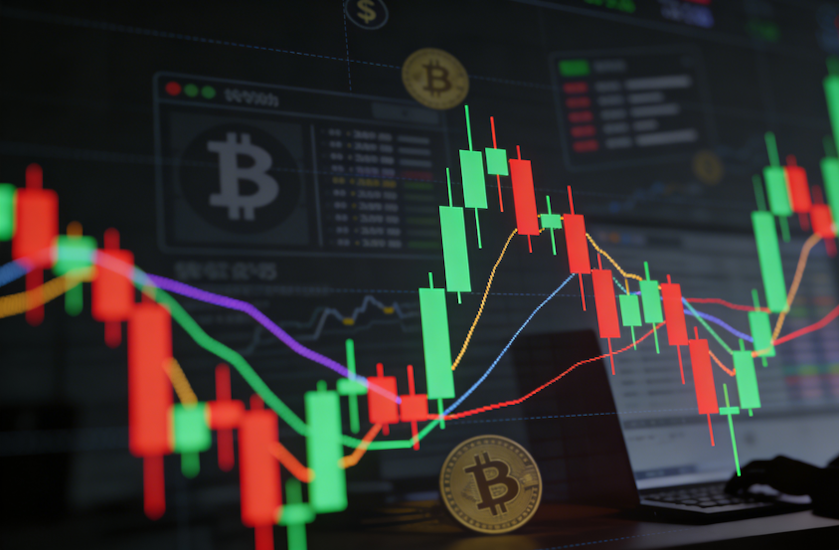 In stark contrast, governments around the world are accelerating the layout of a controllable digital ecosystem, in which the development of digital renminbi has become a global benchmark. In 2026, there will continue to be breakthroughs in cross-border testing and implementation of digital renminbi, not only realizing real-time exchange and clearing of Hong Kong's licensed stablecoins, but also reducing the cross-border transaction time from 2 hours in the traditional model to 3 minutes. Businesses based on the multilateral central bank digital currency bridge will achieve "second-level" and "8-second-level" transfers. The handling fee is significantly lower than the traditional SWIFT system. In some scenarios, the handling fee is reduced to 1/200 of the traditional system, truly achieving financial-level security and controllable traceability at the regulatory level. The government-led digital ecosystem not only takes into account technological innovation and efficiency improvement, but also firmly controls management and control, which can effectively prevent risks such as money laundering and illegal fund transfers, and maintain the stability of financial order. This also confirms a core logic: the core of finance and currency is always "controllable", and any free ecology that is free from supervision cannot become mainstream. Supervision notices issued by multiple ministries and commissions in 2026 make it clear that domestic virtual currency-related business activities are illegal financial activities. From transaction exchange, mining and production to cross-border services, penetrating supervision is implemented across the entire chain. This policy is not to suppress technological innovation, but to maintain the bottom line of financial security and guide the development of the digital economy in a legal and compliant direction. In fact, the world's major economies are becoming increasingly cautious and strict in regulating virtual currencies, because all countries know that the dominance of the monetary and financial systems must not be left in the hands of uncontrolled organizations. FinaleEthereum’s quantum security upgrade may allow it to survive for a few more years at the technical level, but it will ultimately not be able to change its underlying genetic flaws. The free nature of digital currency is destined to only wander in the gray area of regulation and become a tool for short-term games between different organizations. The fluctuations in its price are just the external manifestation of this game. On the other hand, the controllable digital ecology led by the government, relying on the dual guarantee of supervision and technology, is becoming the core carrier of the digital economy era. The future digital financial landscape must be a world of controllable ecology, and decentralized digital currencies such as Ethereum are ultimately just runners in the evolution of this landscape. Their final destination will either be included in a certain country's regulatory system and become a "vassal", or it will be gradually eliminated by the market due to continuous technological iterations and regulatory tightening, or it will become a tool for cutting leeks for a certain organization or a certain stage. This is the inevitable result of organizational games and the underlying logic of financial order - freedom will always give way to control, and disorder will eventually return to order. Always remember: technology is just a tool, not the subject.
|

|

|

|

|

|